Experiencing Art and Life at Alberta University of the Arts

The author shares experiences as a first-year Bachelor of Fine Arts student at Alberta University of the Arts. Exciting and challenging, the environment invigorates creativity and offers opportunities for personal growth and artistic expression. The author enjoys engaging with younger peers, adapting to a busy academic schedule, and embracing the freedom to create meaningful art.

Earlier this year I mentioned that I had been accepted to the Alberta University of the Arts (AUArts) as a first year student pursuing a Bachelor of Fine Arts (BFA). Now that I am halfway through the first term I thought I would share my experiences so far.

It was during the two days of mandatory orientation, early in September, when I quickly realized that I was going to be immersed in an energy far different from my life so far. The orientation was jam-packed and fast-paced. We were placed into small groups for orientation activities. I ascertained that there were definitely other “mature students” in our midst, and as wide-eyed groups of new students passed each other in the halls and stairwells, us older folks caught each others’ eyes. As the mornings turned into afternoons, our glances at each other shared a common telepathic message: When do we get our nap? Well, a nap or some kind of break at a pub. Either would have been fine! Sadly neither happened, but AUArts did a fantastic job of orienting all new students to university life. And my group won first place in a competition to create fashion out of found objects. An auspicious beginning!

As I settled into my new routine and started attending classes, the difference in the energy compared to my daily life before was palpable. It’s GOOD to hang out with younger people! They are full of ideas and full of “trying to figure things out.” They form friendships quickly. They have different issues and problems that distract me from my own worries. I immediately knew that I was going to be challenged by both their creativity and their talents. In fact, there are already a few first-year students that have caught my attention as being artists to watch. The vibe is dynamic, and casual – yet at the same time, very serious. It’s given me new life and new curiosity, and I couldn’t be more grateful.

The assignments are plentiful and time-consuming. It’s definitely been a challenge to balance work, studies and domestic life. I quickly learned that I can’t let a day go by without working on at least one of my classes. Even one day of mindless bliss and abdication of responsibilities comes at a heavy price.

Instructors and technicians at AUArts unanimously promoted an energy of “all things are possible”. Comments such as “You can’t light a fire in the building, but if you WANT to, make sure you see a tech. There’s probably a way to make it happen.” or, “You are not allowed to have remains such as bones here, but if you want to bring them in, see a tech first and we’ll figure it out.”

In other words, if it’s art, you can probably do it. The benefit is that it leaves our minds free to think of anything from ridiculous to sublime. I believe that a free mind is a very good place from which to cultivate meaningful art. It meant that a first-year student submitted a drawing of a collection of sex toys for her first assignment, and another submitted an assignment based on holding various types of papers over smoke – to see what kinds of marks the smoke could make. It also means that cohorts of young (and older!) students are able to free ourselves to create from a genuine place. Authenticity is a challenge in our society. AUArts demands it.

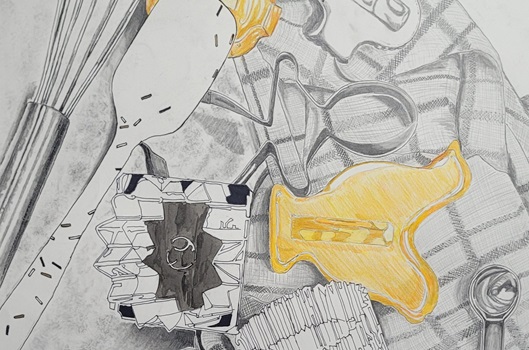
A sample of the author's sketching practice.
Drawing practice, 2024 Laura Silver

Another amazing part of the Alberta University of the Arts is that there are gallery spaces absolutely everywhere. Any student can apply to display their art – from an individual piece to an entire show – at just about any time! This gives us all the opportunity to build our professional curriculum vitae with respect to formal gallery shows. In fact, my recently completed hat – wet felted from merino wool – is on display in a spot reserved for the National Gallery of Contemporary Fibre Art. How cool is that?

Merino wet felt hat. 2024 Laura Silver

So far I am loving university – despite the intensity of the material and the panic of deadlines. It’s so challenging, and I can FEEL the effect of being exposed to an entirely new environment with new mental (and even existential) challenges has on my mind, body and spirit. It’s invigorating.

One of the biggest lessons so far has been realizing how ingrained I was in my routine and my patterns, prior to starting university. My life had become routine and predictable. I had often thought, “Tomorrow, I’ll wake up and do something different.” but my tomorrows turned into more tomorrows. Voluntarily thrusting ourselves into an unfamiliar situation wakes us up! I am so pleased that I have put myself in a situation where I NEED to create art every day. It hasn’t taken away the magic of it. In fact it’s given me permission to indulge in one of my greatest joys – something I didn’t think I had time for, before. I’ve carved out some time, and I am loving it.

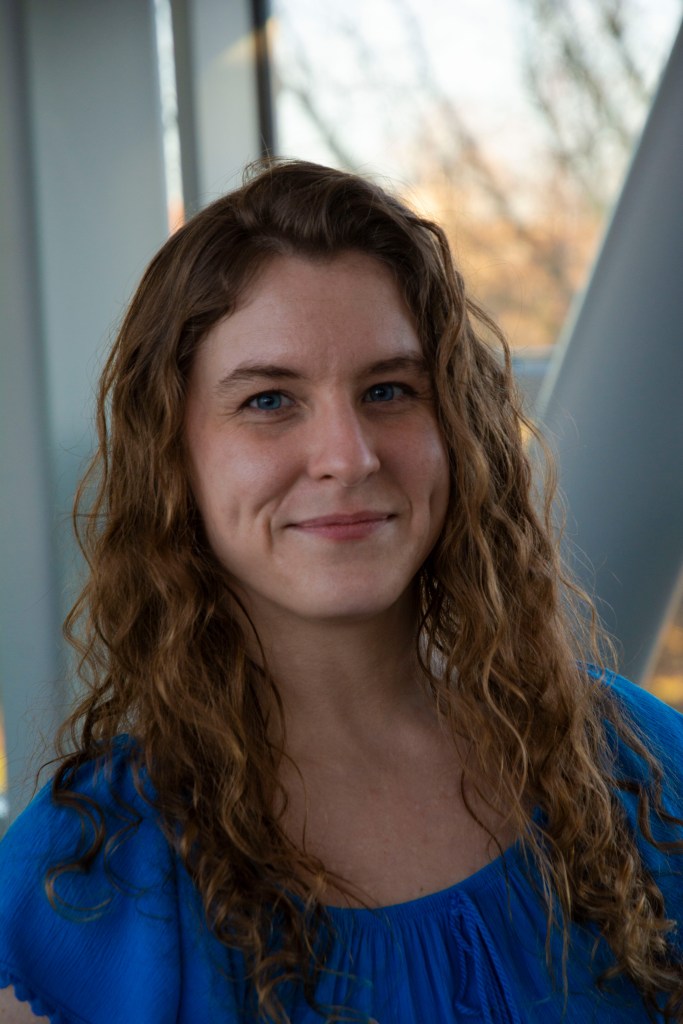
Anissa White

” Through opening myself up to expressing my pain and vulnerability, my artwork began resonating with others in ways I never thought possible. “

Anissa White, Artist

Today we are celebrating a wonderful multimedia artist currently living in Pennsylvania, USA. Anissa is currently completing her MFA in Ceramics. I actually learned about Anissa through a textile exchange initiative in a Facebook group – the idea was to send other artists a small piece of fabric or textile to inspire creativity. I received some funky samples from Anissa – and used them later in a quilt. Since becoming friends on Facebook, I have had the delight of following her work – which is both skilled and provoking. Anissa is currently working on her thesis project:

The Safety Project examines how binary thinking influences the availability and distribution of safety information within our society. I will be asking members of my community to respond to several questions about safety on pieces of fabric. After collecting responses for a span of six months, I will sew all the swatches of fabric into two quilts. These two “safety blankets” will be divided based on whether participants were socialized as male or female. Displayed side by side during my thesis exhibition in spring 2025, they will showcase the imbalance of safety information that is taught based on perceived gender.

Follow the project on Instagram: @the_safetyproject

1.      What is your earliest memory of doing something artistic?

My earliest memory of doing something artistic was when I was in preschool. I remember we read a book about Georgia O’Keefe and her paintings of flowers. Following the reading, we did an art project based on O’Keeffe’s artwork. The assignment involved painting flower petals and arranging them in a circle, then adding pom-poms to the center to resemble her iconic poppy flowers. I vividly remember the thought and care I put into selecting colors that mirrored those in her painting – shades of red, orange, and yellow. The finished piece is still proudly displayed in a shadowbox frame at my parents’ house.

2.      What mediums do you use, and do you have a favourite?

I have experience working with a wide range of materials, such as glass, wood, metal, found objects, paint, ink, and more. Currently, I am focused on working with clay and fibers, but I don’t have a specific favorite material. For me, the most important aspect is bringing my ideas to life, regardless of the material involved.

3.      Tell me about your studio, and how much time you spend in it.

I am currently in grad school getting my MFA in ceramics, so I have the fortunate luxury of getting to go to a private studio every day with access to materials and facilities 24/7. I spend about 60 hours a week either in my studio or in class. In the past, I used to dedicate more time, around 70-80 hours, to my art practice. However, I have come to realize the importance of taking breaks and having days off for my overall well-being. Once I graduate, I anticipate having to strike a balance between work and creating, which will most likely result in spending less time in the studio. I am actually looking forward to this change, as school has been quite stressful, so taking a break and slowing down my production for a while will be a welcome relief!

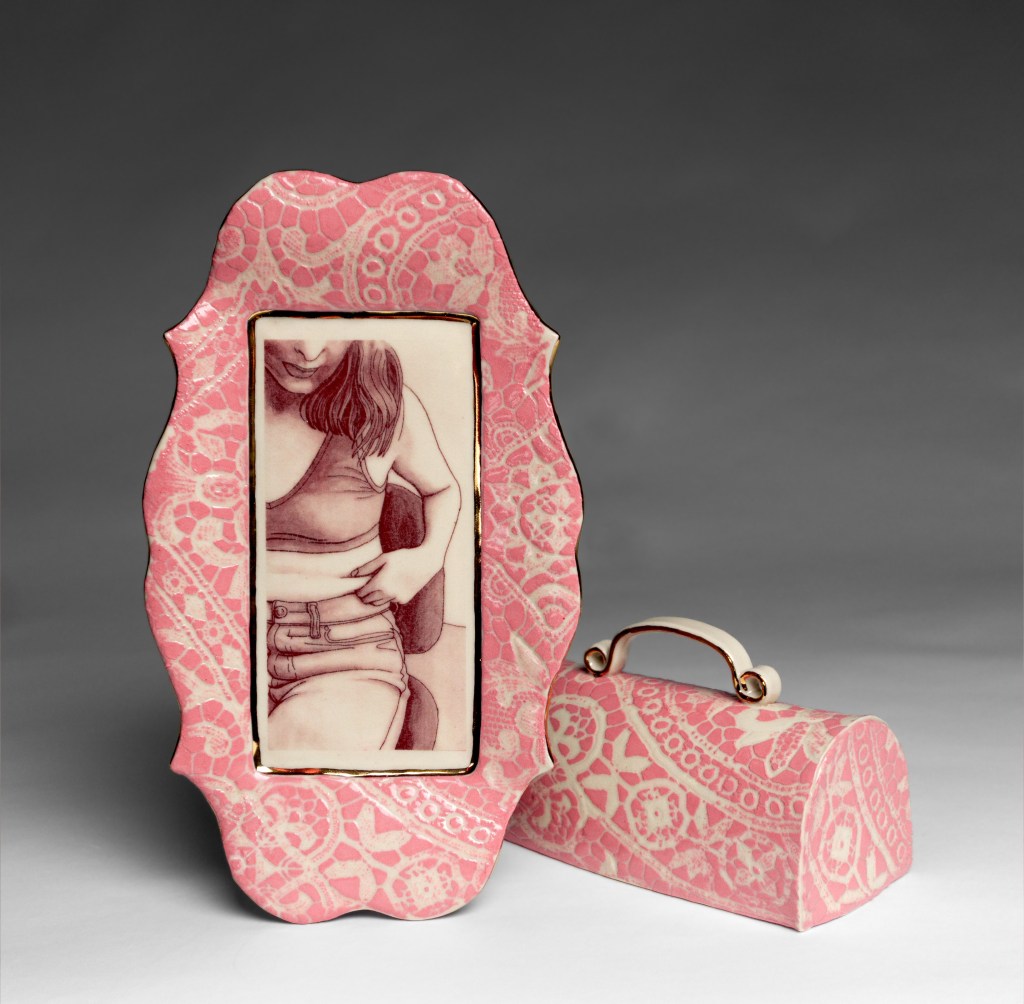
Various works by Anissa White, Copyright Anissa White

4.      What are some items in your studio that you can’t live without?

Snacks! I have so many snacks in my studio because otherwise I will spend all day there and forget to eat. It’s also much more convenient than having to leave campus or order delivery while I’m in the middle of a creative flow. 

5.      We’ve often heard the idea that you have to be a “suffering artist” to make great art. Do you think this is true? Can we make art from a place of great joy and ease? 

I think we can absolutely make amazing art from a place of great joy and ease, however, my personal journey has been different. I have faced challenges such as being sexually assaulted and leaving traumatic relationships. Through opening myself up to expressing my pain and vulnerability, my artwork began resonating with others in ways I never thought possible. I don’t believe that artists must endure a life of suffering to make an impact, but I know that for me, those experiences shaped me into the artist I am today. Whether it be joy or sorrow that fuels our creativity, it is that raw, unfiltered emotion and authenticity that breathes life into our work, turning it into something truly beautiful and meaningful.

6.      What are the things that challenge you, as an artist?

The biggest challenges I face are managing expectations and advocating for myself. A few years ago, I was diagnosed with autism, which has brought many improvements to my life such as understanding my needs and how I work best. However, I struggle with being a perfectionist and comparing myself to others. I often have an inner voice telling me that I am not good enough or not working hard enough.

I am learning to be more forgiving of myself and to appreciate my own unique journey. I understand now that there is no one set path to success, and the important thing is the progress I make along the way, rather than reaching certain milestones based on others’ achievements. 

As I continue to develop in both my work and personal life, I am finding it easier to ask for help, although it is still a challenge for me. I am fortunate to have understanding colleagues and peers who are always willing to assist me, whether it is with physical tasks or simply offering a listening ear during stressful times. I know that I will continue to work on these skills for a long time, but I am grateful that I am becoming more aware of when I need help or when I need rest. I understand that taking care of myself is just as important as creating.

7.      Who are the artists that YOU follow? 

I admire and am greatly inspired by Tanya Aguiñiga’s social justice art and the work she does along the Mexican/U.S. border. I absolutely love the work that Marissa Childers makes. She creates beautiful handmade ceramics with delicate floral designs paired with lush textures; it’s absolutely stunning! I also love Matthew Dercole’s sculptures for their seamless marrying of many materials and consistent nature themes throughout. I highly recommend checking out their work!

8.      What is the best advice you have ever received as an artist?

When I was working in South Florida, around 2018, I had the opportunity to teach ceramic workshops in a small studio. I would often receive commissions from students or visitors to the shop. I remember one particular instance when a surgeon requested a sculpture of a heart for his home. I felt quite nervous at the thought of creating something for someone who works with actual hearts, and I experienced a moment of self-doubt. However, a friend of mine offered some wise advice. They reminded me to create work that would make my high school art teacher proud. This sentiment has stayed with me ever since. I thought she would be very pleased with that heart, and so was the surgeon when he came to pick it up!

My high school art teacher was a significant influence in my life. She was my first artist mentor, fostered my passion for the arts and always encouraged me to take on new challenges. I believe that she would also be proud of the work I am creating today.

9.      Do you have any “Stretch Goals” or ways that you want to express yourself that you haven’t tried yet?

I have set two personal goals for myself that I am striving to achieve. The first goal is to have the opportunity to be featured on the cover of Sculpture Magazine or Ceramics Monthly. It would be truly amazing to see my work showcased in such a prominent way. 

My second goal involves setting up a scholarship fund to support neurodivergent students who are pursuing higher education in the arts. This is very important to me because I personally benefited from scholarships that allowed me to pursue my bachelor’s degree. I believe that giving back to students who share my passion for the arts is a way for me to express my gratitude for the support I received. I am hopeful that one day I will be able to make a difference in the lives of students who have the same drive and commitment to the arts that I do.

10.  Where can we find your work?

I am currently only on Instagram @anissawhiteart. I am working on developing a website, but it is slow going. Please feel free to reach out on Insta, check out my page and say hi! 

Guest Blog: Susan Manchester

Let’s Meet the Artist!

I’ve known Susan for approximately fifteen years. I used to walk my giant dog, Ty, in Bloor West Village in Toronto. Susan, her late husband Mike, and I would chat whenever I caught them hanging out on their front porch – which was generally any evening that the weather was nice. Susan often painted on the porch and I was fascinated by the free form and colour of her pieces. When Mike passed away early in 2011, Susan found solace in painting. I should also mention she is an incredible poet. The tomes I have of her work are some of my most prized possessions. In my quest to highlight female artists, Susan is a “VIP” guest blogger – creative, engaging, and exuding both genius and warmth. I am a huge fan.

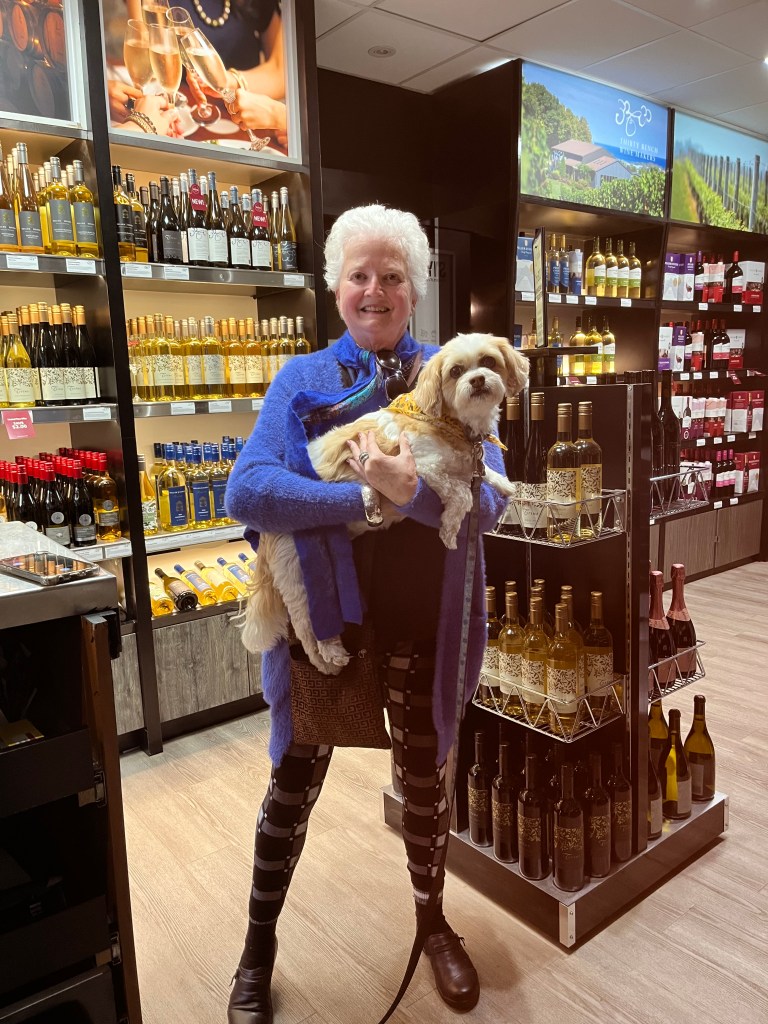
Susan and her studio assistant, Cookie.

Susan, what is your earliest memory?

My earliest memory of doing something artistic may be making potholders on a metal “loom” using nylon loops. Does that count? It is significant to me because I loved the colors then and I still love colors.

What mediums do you use, and do you have a favourite?

I use acrylic paints, tissue paper, Japanese paper, ribbons, lace, fabrics. My favorite is Japanese paper with acrylics.

Mixed media work by Susan Manchester

Tell me about your studio, and how much time you spend in it.

My studio is upstairs in a room that used to be a bedroom. It faces east with a big window so the morning light is wonderful and throughout the day the light is good. I have oodles of Japanese paper: some rolled up and stored in clear plastic compartments that hang on the door; some hanging over dowels on the wall; some in piles on shelves. 

My paints are stored in labeled clear plastic containers on book shelves. I have a large table where I use a table easel for smaller work.  I have a desk where I use the paper cutter and store some materials for making painted greeting cards. A large easel sits in the center of the room for larger work.

I spend an average of 2 to 3 hours a day in my studio in the cold weather. When the weather is warmer I paint outside on the front porch or the back deck.

Mixed media work by Susan Manchester

What are some items in your studio that you can’t live without?

In the studio, I can’t live without my little kettle for tea or instant coffee. Haha! And my four Thomas Cole prints that are on the wall above my large table.

We’ve often heard the idea that you have to be a “suffering artist” to make great art. Do you think this is true? Can we make art from a place of great joy and ease?

Yes you can make art from joy and ease! I have done it both ways—after my husband died I was suffering terribly and used my art to paint the grief. And now, 13 years later, I can say I am mostly happy and the art is flowing. That does not mean that I don’t tap into the grief—I do, often. But the energy that comes with the joy of creating allows the art to live vibrantly and meaningfully.

What are the things that challenge you, as an artist?

My main challenge as an artist is to be able to paint more intuitively, especially as I am leaning more towards the abstract. Another challenge is to try to resist the solitary life that can develop when the desire to remain in the sudio is so strong.

Who are the artists that YOU follow? 

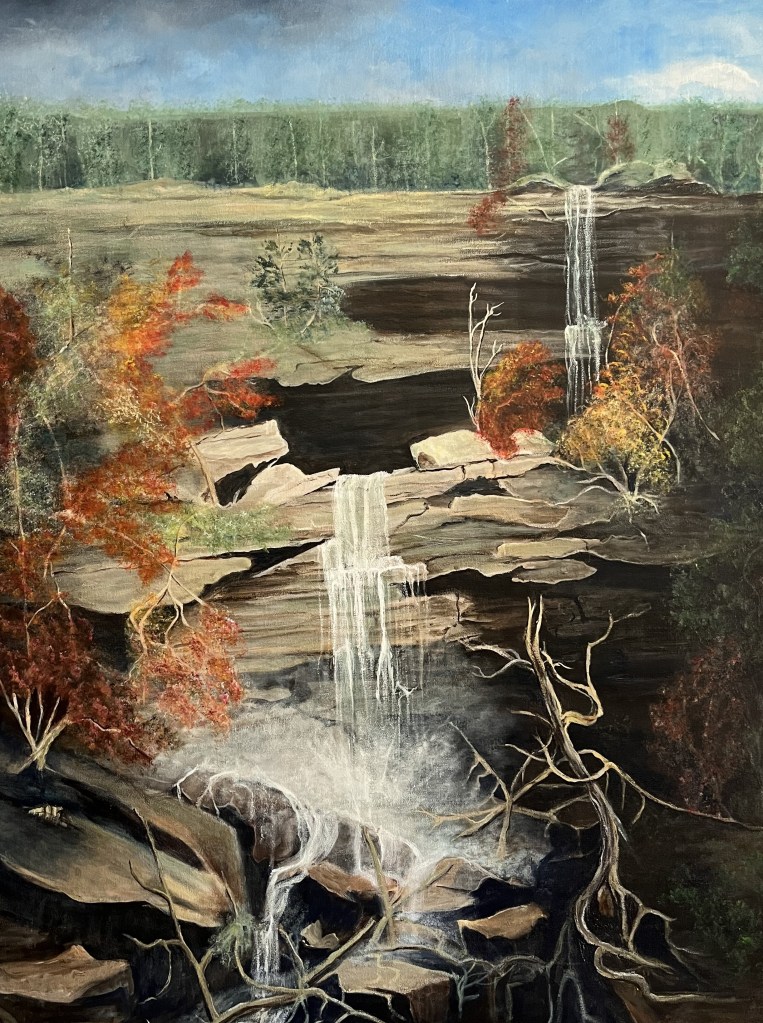
I am loving Louise Fletcher and Dorothy Ganek as abstract artists. My first influences were Dali, Van Gogh’s “The Potato Eaters,” and my all time favorite landscape artist Thomas Cole.

What is the best advice you have ever received as an artist?

Best advice: “A tree can be any color.” That came from my teacher Modesto Ingratta, who is still my teacher. That little statement says it all. It is all about freedom, truth, and courage for an artist. There is no end to the learning. Rejoice in that!

Do you have any “Stretch Goals” or ways that you want to express yourself that you haven’t tried yet?

I am always stretching. I may try pastels. Never done that and I have a lovely set.

Where can we find your work?

My work is available on my website: susanmanchester.myfreesites.net
You can see a bit of my process here.

Or follow me on Instagram: susan_manchester and DM me for details.

Guest Blog: Doodle & Flourish Art

Beverley Moorhouse

Let’s Meet Beverley Moorhouse!

Beverley is an intuitive artist working in bold watercolours and inks to weave emotions into every inch of my artwork. Her passions are an unwavering commitment to mental health and the belief everyone should be deeply seen. Through her creations, she creates a unique talking point, inviting you in to discover what all the mark making might mean. Her art helps those feeling ignored, isolated, dismissed and misunderstood to experience belonging, recognition, find acceptance and feel a sense of importance.

Beverley, what is your earliest memory of losing yourself in something artistic? 

I have always been creative. In childhood, I was always making things. I liked nothing more than creating Christmas decorations to hang in my family home.

I love the name of your business, Doodle and Flourish. How did you land on that name?

The Imposter Within, by Beverley Moorhouse

I have always loved calligraphy.  It was on my return to creativity later in life that once more, I took up calligraphy. “Flourish” is the decorative curls we see in calligraphy. But “flourish” also means thriving. “Doodle” is all about just putting pen to paper and letting that pen produce a line… seeing where the line travels across the paper.

I have always encouraged people to be creative. “Doodling” doesn’t sound too scary and I think it’s the easiest thing for people who aren’t familiar with art to do. While they are “doodling,” they are accessing their right brain and getting out of their analytical left brain. They are beginning to “flourish” in their creative life.

That’s how Doodle and Flourish was born.

What mediums do you use, and do you have a favourite? 

I use watercolours, inks, acrylic pens and marker pens. I have always loved watercolours because I love how they bleed and bloom on paper. They have a life all of their own and you can’t really control that bleed and bloom, other than removing the water. That says freedom to me. Freedom to move, live and be as creative as you want.

Tell me about your studio, and how much time you spend in it. (If you don’t have a studio, and your art is made on the kitchen table, please talk about how you carve out that space for doing your art).

I don’t technically have a studio! I have a spare bedroom and I create in there. I have a simple desk and a chair, that’s really it. Along with some storage drawers for all the paint, paper and pens.

I don’t calculate the time spent on art. I simply create when the intuition strikes. I create when time with my family and job allows. I think that is the way to be. I can’t imagine setting a schedule to create. I think that puts a fence around intuitively creating. I know if I did that, I would arrive at my desk not knowing what to create or not feeling like it that day. I much prefer to create when my intuitive self is ready. It comes back to that freedom feeling again.

My Spirit Takes Flight, by Beverley Moorhouse

What are some items in your studio that you can’t live without? 

My fineliner pens. Unipin has become a favourite, with Micron pens in second place. Without those, the marks wouldn’t happen.

We’ve often heard the idea that you have to be a “suffering artist” to make great art. Do you think this is true? Can we make art from a place of great joy and ease? 

I think “suffering artist” actually is another term for “starving artist.” Many artists struggle to make a living from their work. I think it’s about finding your purpose and the purpose of your art. Art communicates to the world. As an artist, what are you trying to communicate with your art?

I could communicate better with my audience when I discovered my art purpose. It also felt like I had come home. When I say “my art and I help those feeling ignored, isolated, dismissed and misunderstood to experience belonging, recognition, find acceptance and feel a sense of importance.” That’s the purpose of my art. People start to wonder what my mark making might mean. They open a dialogue and ask questions. It gives me an opportunity to talk about my life, my experiences and how they appear in my art. In turn, I can highlight how I am not the only one to have gone through something. Others have too, perhaps even the people looking at my art. I talk about personal things that appear in my art. I speak about tough feelings and how tough life has been in the past and how tough it is now for everyone. I feel those things should not be swept under the carpet. If my art can get people talking, then I have achieved something.

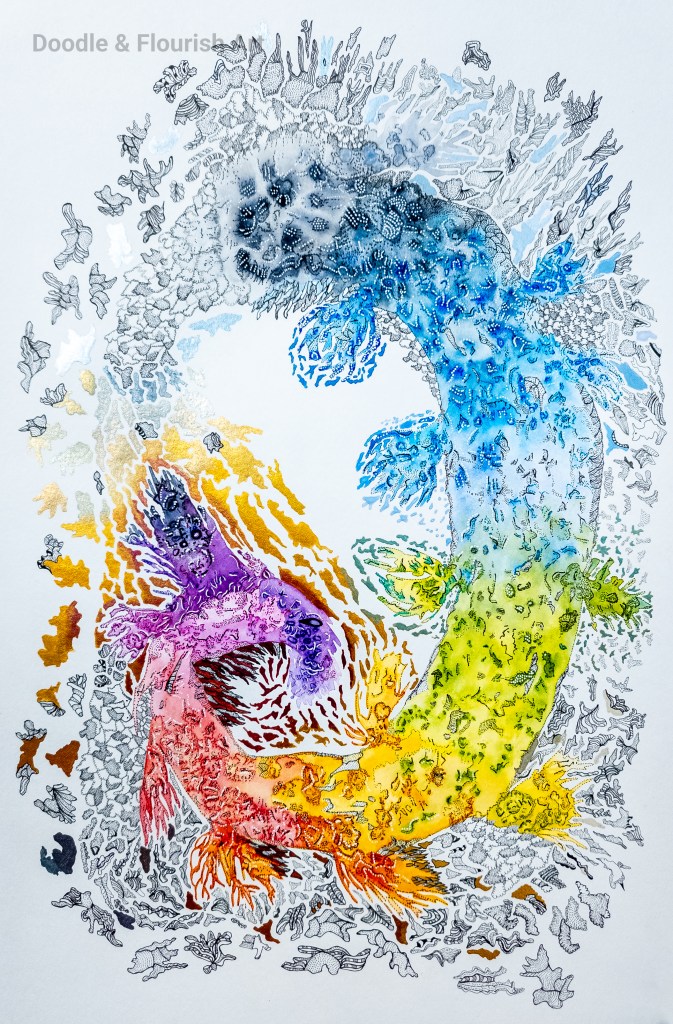
Bursting Out, by Beverley Moorhouse

What are the things that challenge you, as an artist?

My own mind! I think we all have to deal with impostor syndrome. We all compare ourselves to others. We all think we aren’t good enough. We all have to battle these thoughts. While social media is good for some things, it is bad for others, such as comparison. I am in a group of artists and constantly one of us will go through some form of impostor syndrome. It’s why it’s good to have a supportive community around you as an artist, so in the dark times, they can lift you back up. For everyone to grow and develop, it takes a village and I think it really does for artists.

Who are the artists that YOU follow? 

My favourite artist is Roberta Boffo. These are her words about her art “Art conveys peace and calm, but at the same time it can disrupt the peace and push the viewer outside of their comfort zone, push them away from what is relatable and understandable to question sanity and insanity. Art that isn’t always what it looks like and that pulls the viewers into it wanting to look for more.”

The purpose of her art is similar to mine and I feel that is why I connect strongly to it.

Do you have any stretch goals for your art? Or, what would you like to do next?

Evolution, keep evolving as an artist. When I look back to where I was a year ago with my art, I have moved on. I think it’s so important to keep evolving and developing both as a person and an artist. To keep peeling that “onion” of yourself, layer by layer. I feel many people have no concept of how many layers they have. It’s important to explore ourselves and uncover new things we never knew about ourselves. That’s the same with art. As we uncover hidden parts of ourselves, I believe they appear in our artwork. It is bound to happen because the art came from us, we are bound to be in it.

Because I am so passionate about finding our purpose, I want to connect with other artists and help them find out what drives their art, and why they create. I have no idea yet how I plan to set about doing this, but I know it will happen. In the meantime, I will keep talking about it!

What is the best advice you have ever received as an artist?

Peel back the layers of yourself and your art. Find your purpose and the purpose of your art.

Things I dislike… about art, about creativity.

Artists on social media who put up a photo of a piece of their art and write in the caption:
“30 x 40 acrylic on canvas.” Just what the heck does that say about their art? I want to know about this piece. Why did they create it, what do they feel it conveys to the world, what’s special about it? All of this they could write on, but never do. People aren’t going to connect with the art if you don’t write about it. We need to stir up the feelings of the viewer to get people to connect with our art and its message.

Where can we find your work?

You can find me on Instagram – doodleandflourishart

For Facebook – Doodle and Flourish Art

Something Bigger Than Small!

A big adventure, so I can continue the Art of Small Things.

I had a wonderful thing happen to me last week: I got accepted to the Alberta University of the Arts (AUArts)! I am absolutely thrilled. At 54 years old, it is a new adventure, but something I have wanted to do my entire adult life.

It feels a bit daunting – knowing that I will be attending classes with young, energetic souls with big dreams and bright futures. I believe my future is bright as well, but my interest in diving into post-secondary education again is purely for the love of learning. Honestly I can’t wait. I can’t wait to register for first year classes, receive a supplies list and explore the campus environment. I will be the gray-haired woman buying all the university merch – the sweatshirt, the scarf, the keychain – you name it. Go big or go home.

The biggest challenge may be choosing a major. AUArts offers many options, including visual arts, textile, sculpture and photography. Throughout my life I have gravitated toward painting, but more recently have found artistic expression in textile arts and photography. How will I ever choose? Luckily, the first year program is designed to help one decide on an area of focus, so I don’t have to make up my mind just yet.

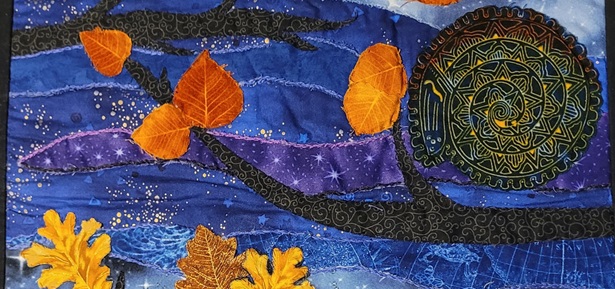
Moonlight, hand-sewn textile, 2015 LSilver

In sharing my excitement, I hope it inspires you to think about what you want to learn next. It doesn’t have to be art! Is there a course you can take, a language to learn, or a new sport? Speaking of physical movement; did you know that the very best prevention against dementia is not word puzzles or intellectual games, as we so often hear? It is actually learning a new physical movement.

It’s never to late to start something. Laura Ingalls Wilder started writing at age 64. Anna Mary Robertson Moses (a.k.a. Grandma Moses) is one of the biggest names in American folk art, yet she only started painting at the age of 76 because her arthritis made embroidery (up to that point, her primary creative outlet) too difficult. Before gaining fame as an artist, Moses began to sell her oil paintings alongside pickles at county fairs.

Nobel and Pulitzer Prize-winning author Toni Morrison wrote her first novel, “The Bluest Eye,” at age 40, while she was working at Random House as an editor. She won her Pulitzer Prize when she was 56, and her Nobel Prize in Literature at 62.

It’s a new, beautiful day. What would you like to learn?

The Art of Small Things, and Being Small!

I was an artist from the time I was small. I know that I drew from the time I could toddle, but my first clear memory of my own art is when I drew paper dolls. They weren’t regular paper dolls. The dolls were Inuit people. Without knowing anything about the culture, I drew a family and cut them out, over and over again. The same family, every time. The paper dolls had long, braided hair and they all had kind expressions. They wore heavy coats with the fur side facing in – except for around their faces. Their boots were thick, sealskin kamiits - the kind made by hand. I remember there was a grandmother, a father, a mother, a girl older than I was, and a baby. The mother carried the baby in her hood, and the father had a spear. They all had designs on their clothing.

By the way, traditional Inuit clothing is highly specialized and also beautiful. You can find out more about it by clicking here.

Every time I finished drawing the family, I would cut them out of the rectangular paper they were bound to and present them to my paternal grandmother – who would graciously tape them to her kitchen wall. I have the faintest of memories of she and my mother conversing about how strange it all was – why I kept drawing the same people over and over again, and why my grandmother was the only person deserving of having them. But my grandmother accepted every one of them without complaint and found a home for them in her kitchen. I was only 5 or 6 years old when I was drawing the paper people, and if you asked me to draw one today I could. I don’t know what happened to the paper Inuit family, but I imagine that at some point they faded from the paper they were drawn on and thrown out.

Was I remembering a past life? Was I influenced by something I saw on the CBC or in a book? I don’t know. But perhaps I stuck with art because my first memories of creating were associated with love, comfort and familiarity.

Art – whether it be drawing, painting, textiles or photography – has always been a way for me to express myself. I have learned (finally, in my fifties) that I don’t do well at all if I don’t practice creating at least once a week. If my creative expression is put on the backburner, I slide into an abyss – emotionally, mentally and spiritually. Balance is restored almost immediately as soon as I step into the unknown – the blank page, the scrap fabric, the dollop of paint, or the nature walk to photograph the light touching the tree branches in a way that it always does, or will never do again. That’s the beauty of it.

I have used the name “The Art of Small Things” for quite some time now – for many reason. I am a “small” artist – I am neither prolific nor famous. I like looking at small things. “Small Things” also - at least for me – means “Simple Things” – and I like my art to reflect those small things we see or experience every day that remind us that life is beautiful.

Come with me as I explore creativity and process, and post works in progress. You are welcome in this small space!